
Routine length
Long or sharp, but clear of the paw pad
The claw needs shortening and assessment. There is no visible wound, swelling, active bleeding, discharge, or marked pain.
Mobile care may be appropriate.Overgrown and embedded cat claws
An overgrown claw may be long, hooked, or tightly curved. An embedded claw has entered or injured the paw pad. Pad contact, tissue damage, bleeding, swelling, discharge, odor, limping, or severe pain moves the case out of routine mobile maintenance.
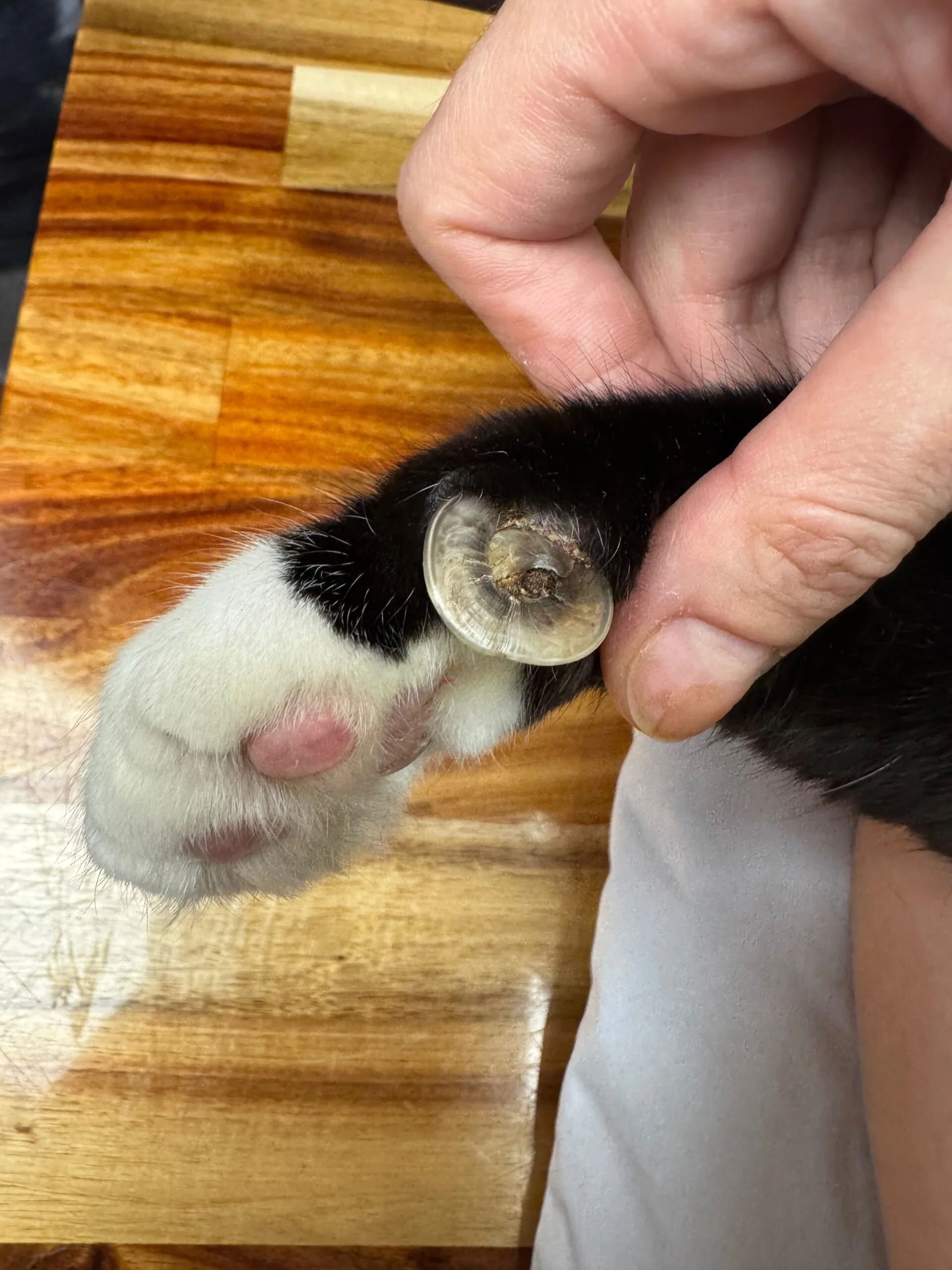
A progression, not three interchangeable labels
Use the paw itself—not the appointment type you hoped to book—to decide what happens next.
Routine length
The claw needs shortening and assessment. There is no visible wound, swelling, active bleeding, discharge, or marked pain.
Mobile care may be appropriate.Advanced overgrowth
The claw may be difficult to access or cut safely without a more controlled setting. Hidden dewclaws and thick senior claws deserve particular attention.
Submit for clinic-based review.Embedded or injured
Bleeding, swelling, discharge, odor, heat, limping, inability to bear weight, or severe pain can indicate a more urgent problem.
Do not wait for routine mobile care.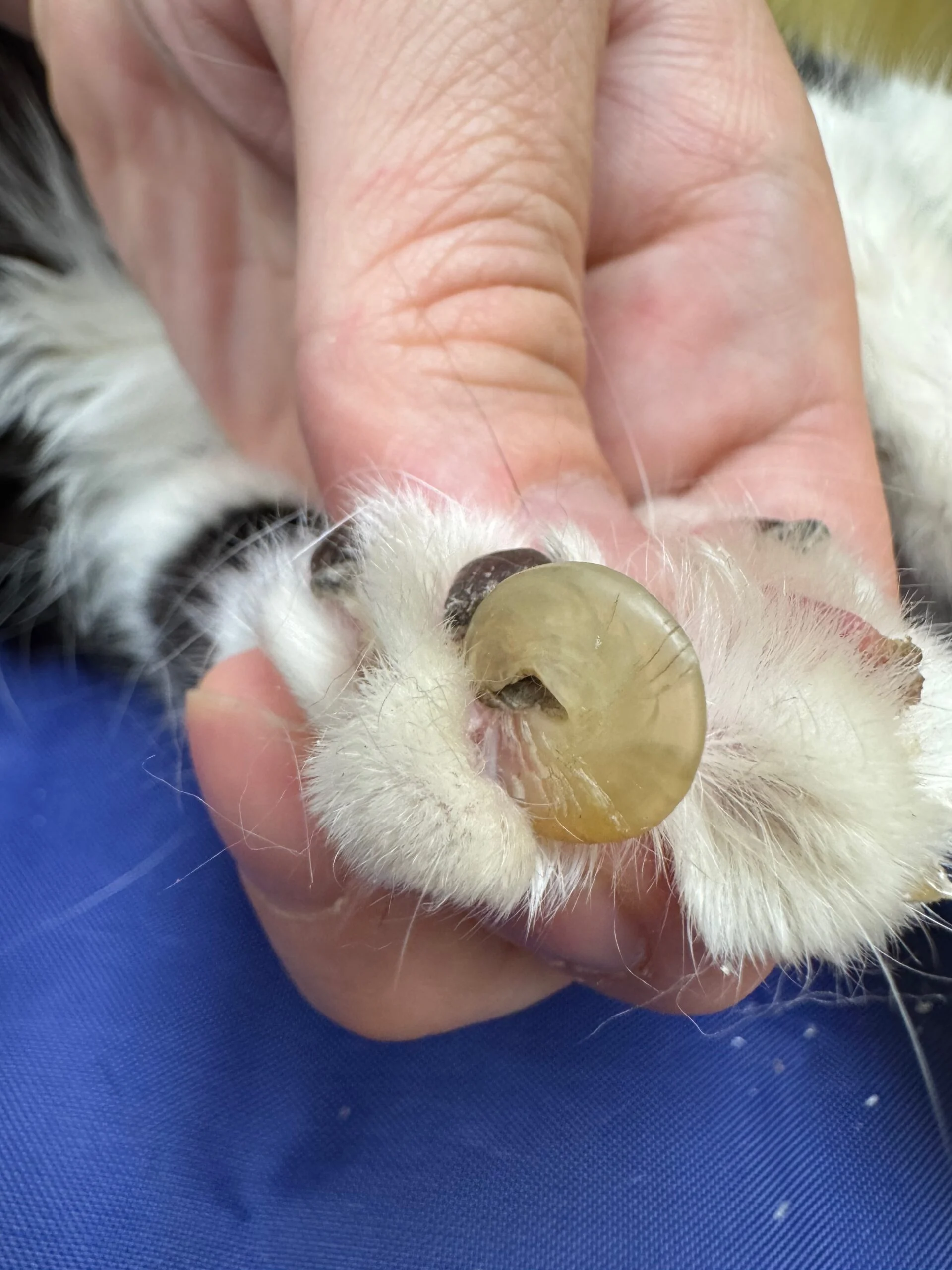
Red flags that change the routing
Contact a veterinary professional promptly when the paw shows injury or the cat shows significant pain or functional change.
The claw tip is touching, indenting, puncturing, or buried in the paw pad.
These findings can accompany tissue injury or infection and require clinical assessment.
A change in gait or use of the limb is not a routine cosmetic concern.
Do not repeatedly manipulate the paw to confirm what you can already see or suspect.
Do not attempt an advanced cut without a safe plan
Sudden movement, poor visibility, or cutting too close to compressed tissue can worsen pain or bleeding. Do not dig at the paw, pull a claw free, or repeatedly test a painful limb.
Educational scope
A photo or description cannot replace an in-person assessment when tissue injury, infection, or severe pain is possible.
Frequently asked questions
The answers below are also used in the page’s structured data, so the visible content and machine-readable content stay aligned.
Open the complete FAQDo not attempt an advanced loop or a claw close to injured tissue unless a veterinary professional has specifically guided you. Sudden movement can cause tearing, bleeding, or deeper injury.
Visible pad penetration, bleeding, swelling, heat, discharge, odor, limping, inability to bear weight, fever, marked lethargy, or severe pain should be treated as clinical red flags.
No. Use the Cats in the City clinic-based paw and nail pathway or contact your veterinarian, depending on the injury and symptoms.
Routine care, delivered where your cat lives
Tell us about your cat, your address, and any handling considerations. The Cats in the City team will review the request and confirm the safest next step.