
Reduced natural wear
Less running, climbing, and effective scratching may allow tips to lengthen faster than the guardian expects.
Mobile claw care for senior cats
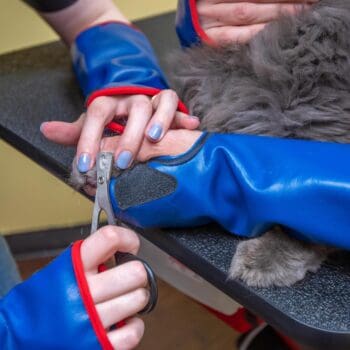
Senior cats may move less, scratch less effectively, and develop claws that are thicker, more curved, or more brittle. A home visit can reduce travel while the care plan accounts for mobility, balance, and position tolerance.
Why the pattern changes
Aging does not produce one universal claw pattern. The practical change is that length, thickness, dewclaws, mobility, and tolerance should be checked more deliberately.
Less running, climbing, and effective scratching may allow tips to lengthen faster than the guardian expects.
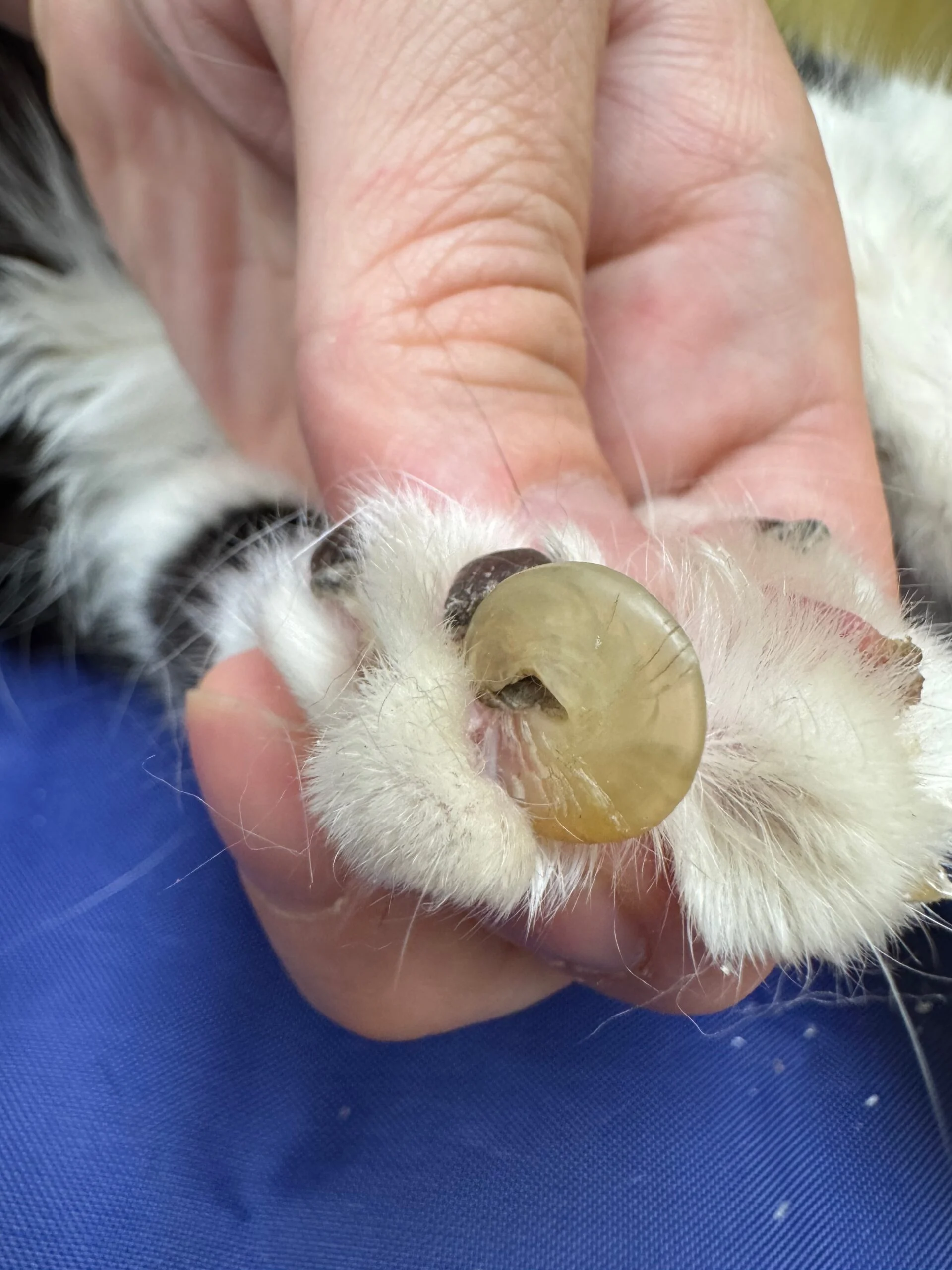
Some older claws become harder to see through, more layered, or more likely to split when compressed without control.
Dewclaws receive little ground wear and can turn toward the pad while remaining hidden in fur.
Arthritis, muscle loss, neurologic changes, or cardiopulmonary disease can make familiar handling positions less appropriate.
Before the appointment
The claw request form should reflect the cat’s current function, not an older baseline. Small changes in movement can meaningfully change the safest position.
Tell us about limping, reduced jumping, stiffness, falls, weak rear limbs, or difficulty standing.
Include diagnosed arthritis, heart or breathing conditions, kidney disease, hyperthyroidism, diabetes, neurologic disease, and recent procedures.
New withdrawal, paw guarding, sleeping more, reduced grooming, or abrupt handling resistance may justify veterinary review.
Choose the setting from two questions
Routine length in a stable cat may fit mobile care. Paw injury, severe pain, or medical instability does not.
Claws are long or sharp but clear of the pad; the paw is not bleeding, swollen, draining, malodorous, or acutely painful.
Marked curvature, very thick claws, reduced mobility, new handling resistance, or a complex medical history should be described for routing.
Pad penetration, bleeding, swelling, discharge, odor, a broken claw, limping, inability to bear weight, or severe pain requires prompt assessment.
Frequently asked questions
The answers below are also used in the page’s structured data, so the visible content and machine-readable content stay aligned.
Open the complete FAQAging cats may be less active, scratch less effectively, and develop claws that are thicker, more brittle, or more curved. The schedule should be based on actual growth and wear rather than age alone.
Reduced movement can decrease natural wear and may make certain positions uncomfortable. Tell the team about diagnosed mobility conditions, recent pain, and changes in jumping or walking before the visit.
Limping, inability to bear weight, swelling, bleeding, discharge, strong odor, a broken nail, severe pain, or a claw entering the pad should be assessed promptly in a clinical or veterinary setting.
Routine care, delivered where your cat lives
Tell us about your cat, your address, and any handling considerations. The Cats in the City team will review the request and confirm the safest next step.