
Trim front, rear, and dewclaws as tolerated
We check curvature, length, and uneven wear rather than treating every claw as identical.
Mobile claw trimming for Portland-area cats
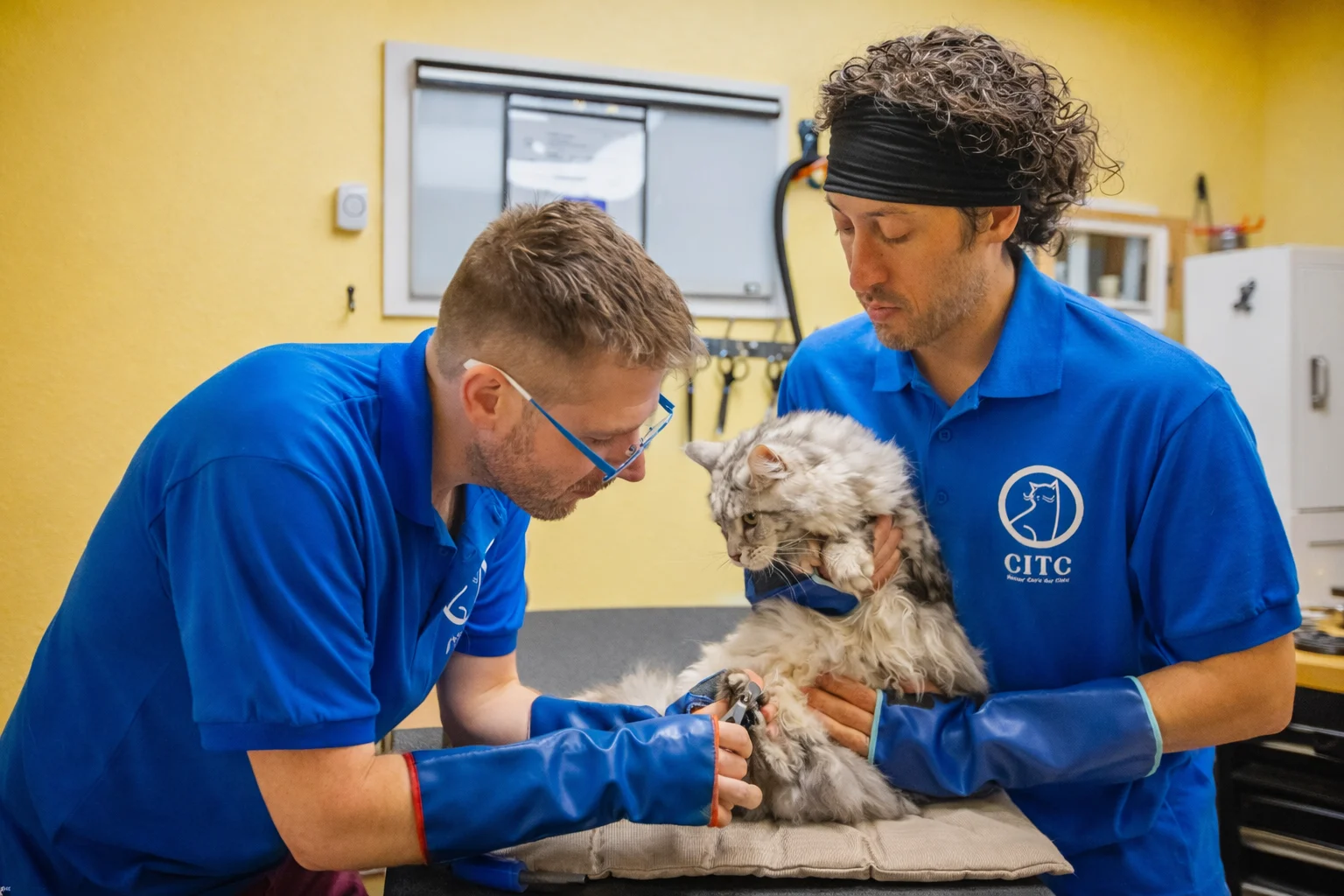
For many cats, the hardest part of a claw trim begins before the trim itself: the carrier, the car, the waiting room, and the unfamiliar smells. City Cat Claws removes those transitions by bringing trained feline care into the home.
What the service is designed to do
Mobile claw trimming is most appropriate when claws need shortening, dewclaws need checking, or a repeating care rhythm is needed—and there is no active paw-pad injury or medical concern.
We check curvature, length, and uneven wear rather than treating every claw as identical.
Additional cats can be added to a visit, reducing repeated travel and household disruption.
Many cats benefit from visits every four to six weeks, adjusted to growth and wear.
Nail caps may be applied after trimming when the claws and paws are suitable.
The room is part of the care plan
A bathroom, laundry room, or compact bedroom usually works well. The goal is not to corner a cat. It is to remove the need for a chase, limit hiding zones, and create a predictable working area.
Close the door before the arrival window begins. Do not wait until the team is at the home to locate the cat.
Block access beneath beds, behind appliances, or inside deep closets when possible. A carrier may remain available as a familiar retreat.
Limit visitors, dogs, loud music, vacuuming, and unnecessary movement through the room.
Guardians often help most by keeping the environment calm and following the practitioner's direction rather than adding more hands.
Why the first appointment may use two practitioners
The first visit is not only a trim. It is an observation of movement, tolerance, recovery, and the amount of physical support needed to safely reach the paws.
Two trained practitioners can divide the work: one person focuses on positioning, balance, and behavioral feedback while the other accesses the claws. This can be less restrictive than asking one person to control the entire body and perform the trim at the same time.
When the first visit shows that the cat can be supported safely by one practitioner, later appointments may be scheduled solo. When two-person care remains necessary, a two-practitioner adjustment may apply.
Guardian-present or prearranged access
Some guardians prefer to be present. Others choose a confirmed access plan so care can happen during a workday or while they are away.
Be available at the beginning of the arrival window, have the cat secured, and allow the practitioner to direct the room setup and interaction.
Entry method, alarm instructions, cat location, and exit confirmation must be agreed in advance. The cat still needs to be secured in the designated room.
Mobile claw-care topic cluster
Start with the service overview, then move into the preparation, behavior, age, scheduling, and household pages that fit your situation.
A room-by-room checklist for a quieter, more organized mobile claw-care appointment.
Open this guideHow City Cat Claws plans routine claw care for cats who resist paw handling, restraint, carriers, or unfamiliar settings.
Open this guideRoutine claw checks and mobile maintenance for aging cats with changing mobility, wear patterns, and handling needs.
Open this guideUse growth, wear, age, mobility, and dewclaw shape to choose a practical claw-trimming rhythm.
Open this guideHow to organize rooms, order, access, and expectations when several cats need claw care in one household.
Open this guideWhat to expect before, during, and after an in-home claw-care visit.
Open this guideEstimate mobile claw-trimming rates by route distance and household add-ons.
Open this guideSoft Paws nail-cap application as an optional mobile claw-care add-on.
Open this guideReady to plan the route?
We will review the request before confirming that mobile claw care is the right setting.
Frequently asked questions
The answers below are also used in the page’s structured data, so the visible content and machine-readable content stay aligned.
Open the complete FAQNo. Before the arrival window begins, secure the cat in a small, quiet, enclosed room such as a bathroom or laundry room. The goal is to avoid a household search or chase.
The first appointment is an assessment of movement, paw access, recovery, and support needs. Two practitioners can divide body support from clipping, then determine whether future visits can be completed safely by one person.
Yes, when entry, alarm, cat location, and exit instructions are confirmed in advance. The cat must still be secured in the agreed room before the visit.
No. A claw that has punctured or become embedded in the paw pad is no longer routine maintenance. Choose clinic-based assessment and seek veterinary care promptly when pain, swelling, discharge, odor, bleeding, or limping is present.
Routine care, delivered where your cat lives
Tell us about your cat, your address, and any handling considerations. The Cats in the City team will review the request and confirm the safest next step.