
Routine maintenance
Long, sharp, or snagging—but clear of the paw pad
Usually appropriate for mobile trimming when the paw is not swollen, wounded, bleeding, or acutely painful.
City Cat Claws may be appropriate.Feline claw health
Claws grow continuously. When normal wear slows, the tip can lengthen, hook, snag, split, or curve toward the paw pad. Regular observation helps keep a maintenance need from becoming a painful injury.
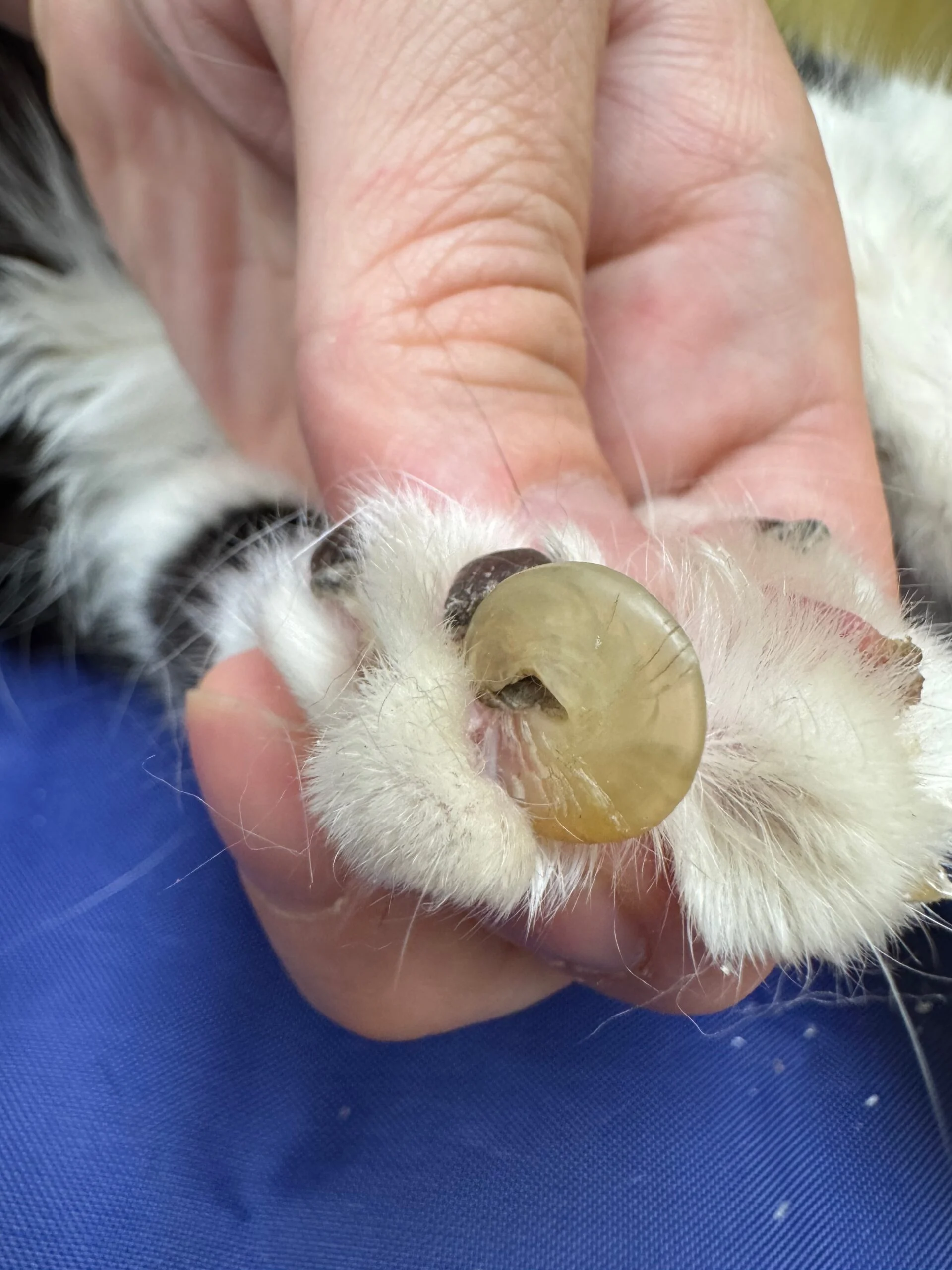
Three different care states
The condition of the claw and paw—not just the length—determines where care should happen.
Routine maintenance
Usually appropriate for mobile trimming when the paw is not swollen, wounded, bleeding, or acutely painful.
City Cat Claws may be appropriate.Advanced overgrowth
May require clinic-based assessment, more controlled support, or a broader grooming plan.
Request review before booking mobile care.Embedded or injured
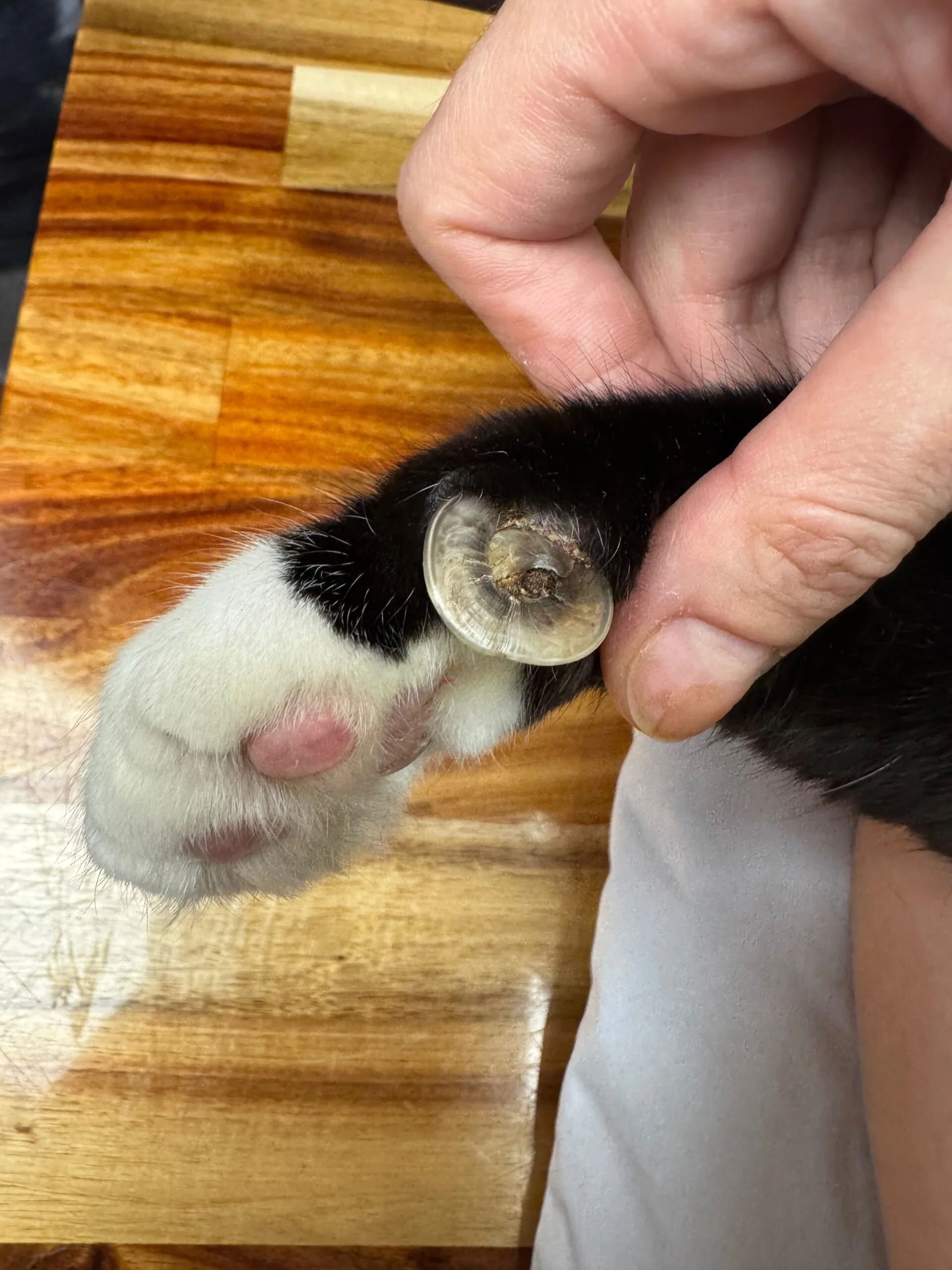
This is no longer routine maintenance. It can involve tissue injury, infection, and pain that need prompt clinical or veterinary evaluation.
Do not wait for a mobile visit.What we look at during routine care
A trim is also an opportunity to notice whether growth, wear, and tolerance have changed since the last visit.
How close is the tip to the paw pad, and is the claw beginning to hook underneath?
Because dewclaws do not bear weight in the same way, they may receive less natural wear and can overgrow quietly.
One paw or one claw may grow differently because of gait, arthritis, prior injury, scratching habits, or altered mobility.
Redness, sensitivity, thickened debris, or reluctance to bear weight can change the appropriate care pathway.
Maintenance interval
Some need more frequent care; others can go longer. The right interval is the one that prevents repeated overgrowth without creating unnecessary handling.
Why older and mobility-limited cats need closer monitoring
Indoor cats may scratch frequently and still develop overgrown claws. Age-related changes can make this more likely.
Arthritis, reduced jumping, less vigorous scratching, altered gait, weight change, neurologic disease, and thickened claws can all change how much wear occurs. Long coats and toe fur can also hide curvature until a claw is very close to the pad.
Routine paw checks should be practical and non-shaming. Overgrowth is a functional care problem, not evidence that a guardian does not care.
The goal is prevention. A predictable maintenance cycle is easier on the cat, guardian, and care team than waiting for snagging, pain, or paw-pad contact.
Red-flag signs
Mobile claw care is not appropriate for an active wound or suspected infection.
Cutting the visible portion does not assess the wound beneath it. Tissue injury, infection, retained debris, and pain may require medical care.
Open the Cats in the City guideClaw-health topic cluster
These pages help guardians recognize what can stay in the mobile maintenance pathway and what needs clinic-based or veterinary assessment.
Recognize the progression from excess length and tight curvature to paw-pad contact, puncture, and urgent escalation.
Open this guideUnderstand normal claw-sheath shedding, what can accumulate around a claw, and when a paw needs closer assessment.
Open this guideUse visible red flags, pain, injury, and handling thresholds to choose a safer care setting.
Open this guideRoutine claw checks and mobile maintenance for aging cats with changing mobility, wear patterns, and handling needs.
Open this guideUse growth, wear, age, mobility, and dewclaw shape to choose a practical claw-trimming rhythm.
Open this guideNeed help choosing the care setting?
The team can review whether the request appears suitable for routine mobile care, clinic-based grooming, or veterinary escalation. A photo review does not replace diagnosis.
Frequently asked questions
The answers below are also used in the page’s structured data, so the visible content and machine-readable content stay aligned.
Open the complete FAQAn overgrown claw is excessively long or tightly curved. An embedded claw has entered or injured the paw pad. Pad penetration, bleeding, swelling, discharge, odor, limping, or severe pain changes the care pathway.
Fur can obscure the curve, cats may hide discomfort, and reduced activity can allow several claws to lengthen quietly. Regular visual and hands-on checks are important when they can be performed safely.
Yes. Routine care should include checking length, curvature, dewclaws, uneven wear, snagging, pressure, and visible irritation rather than clipping without looking at the surrounding paw.
Routine care, delivered where your cat lives
Tell us about your cat, your address, and any handling considerations. The Cats in the City team will review the request and confirm the safest next step.