
Environment-sensitive
The cat may be difficult in a carrier or clinic but more organized in a familiar room.
Mobile claw trimming for reactive cats
City Cat Claws does not require a retail-perfect handling profile. The first visit is an assessment of movement, avoidance, paw sensitivity, recovery, and the amount of support needed to attempt routine care without forcing completion.
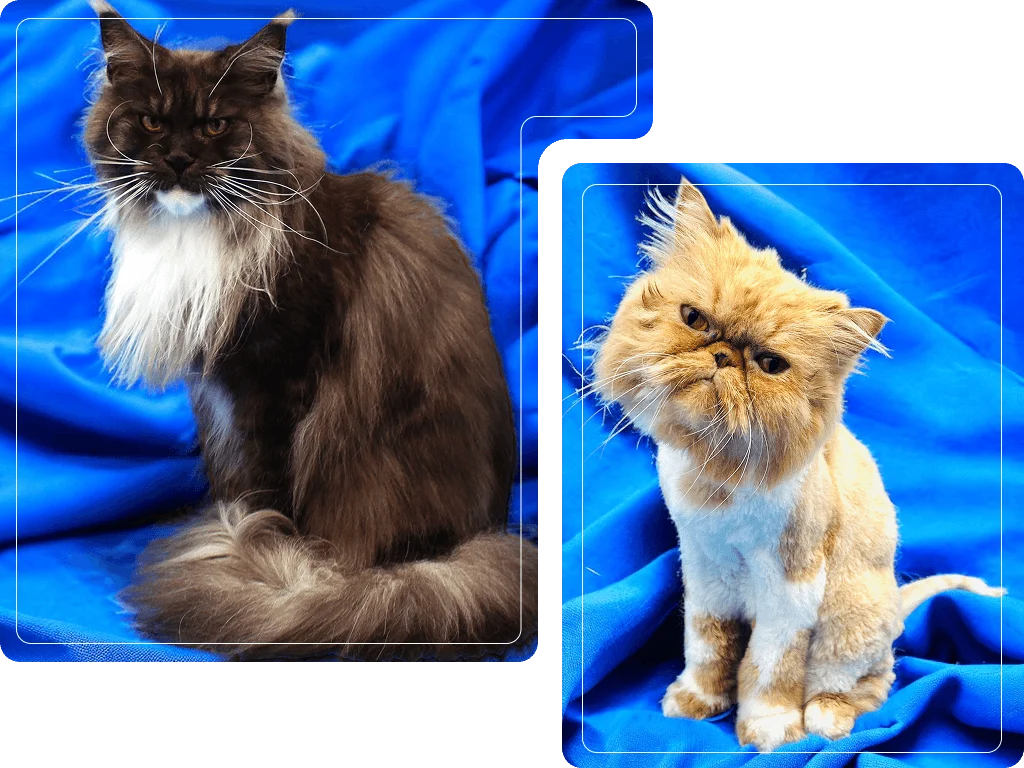
Reactive is information, not a verdict
A cat may resist paw handling, elevation, restraint, unfamiliar people, carriers, veterinary environments, or a particular body position. Those are different problems and they do not automatically require the same response.
The cat may be difficult in a carrier or clinic but more organized in a familiar room.
The cat may tolerate body contact but react when a toe, dewclaw, or painful area is approached.
The cat may escalate when movement is restricted, even when the paw itself is not painful.
New or sharply increased reactivity can be a reason to rule out pain rather than treating the response as behavior alone.
The first-visit decision path
The goal is to identify a workable care configuration. That may be a completed trim, a partial trim, a different staffing plan, or a recommendation for another setting.
The team reads movement, orientation, breathing, escape planning, contact tolerance, and recovery before asking for paw access.
Two practitioners may divide body support and claw access so one person is not simultaneously controlling the body and operating the clipper.
The order of paws, amount of elevation, duration of contact, and use of pauses are adapted to the cat rather than imposed as a fixed routine.
Completion is not the only successful outcome. A pause, partial service, reschedule, veterinary medication discussion, or clinic-based plan may preserve the next opportunity for care.
What mobile care can—and cannot—change
Removing the carrier and car ride can be highly relevant for some cats. It does not erase pain, severe handling risk, medical instability, or every learned response to paw care.
The cat can remain in a familiar sensory environment and avoid the transitions around transport.
Support and clipping can be coordinated rather than concentrated in one pair of hands.
New pain, limping, swelling, injury, or a claw entering the pad changes the care pathway.
Clinic resources, a prescribed medication plan, or veterinary support may be safer when handling thresholds remain too narrow.
Frequently asked questions
The answers below are also used in the page’s structured data, so the visible content and machine-readable content stay aligned.
Open the complete FAQNo. The first visit is designed to assess the cat who actually arrives, including movement, avoidance, paw sensitivity, recovery, and tolerance for support.
No. The team works within safety and tolerance thresholds. A partial trim, reschedule, medication discussion with a veterinarian, clinic-based appointment, or referral may be safer than forcing completion.
Avoid repeated testing or prolonged handling on the day of care. Prepare the room, keep the household quiet, and share an accurate handling history so the team can plan from a neutral starting point.
Routine care, delivered where your cat lives
Tell us about your cat, your address, and any handling considerations. The Cats in the City team will review the request and confirm the safest next step.