Often consistent with normal shedding
- Hollow, lightweight, translucent shell
- Found near a scratching surface
- No swelling, bleeding, odor, discharge, or pain
- The underlying claw appears intact
Cat claw sheath buildup
Cats normally shed outer keratin layers from their claws, often through scratching. Hollow translucent sheaths can be normal. Material that remains around a distorted, painful, swollen, bleeding, or draining claw needs closer assessment.
What a sheath is
As a cat scratches, an older outer layer may loosen and leave behind a hollow, claw-shaped sheath. Finding those translucent shells near scratching surfaces can be part of normal claw renewal.
Why buildup can become harder to see
The appropriate response depends on what surrounds the claw, whether the cat is painful, and whether the material can be assessed without forcing the paw.
Older claws may become thicker, more brittle, or more layered while reduced activity lowers natural wear.
Fur can hide curvature, debris, pressure, and the relationship between the tip and the pad.
A home inspection may be incomplete when paw extension produces distress or the cat has a history of pain.
Assessment before clipping
A claw should not be treated as an isolated object when there is inflammation, pain, or abnormal material around the nail bed.
Choose the next step
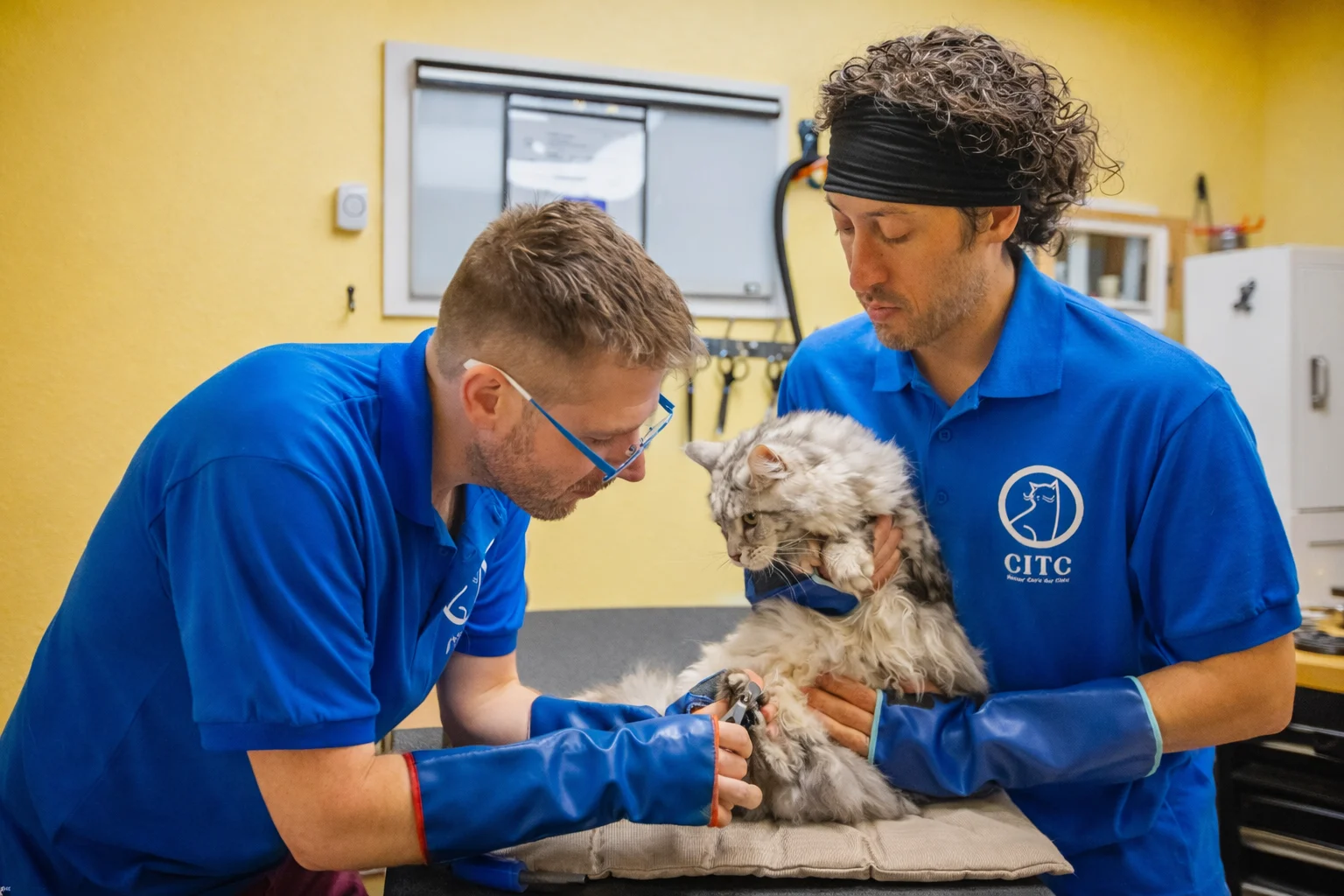
City Cat Claws can assess ordinary claw length and visible sheath patterns during a routine visit. It does not diagnose infection or treat injured tissue.
Claws need shortening; the paw is comfortable; there is no swelling, bleeding, discharge, odor, or wound.
There is persistent buildup, unusual thickness, or uncertainty, but no active injury or significant pain is visible.
Redness, swelling, bleeding, discharge, odor, a broken claw, limping, or marked pain is present.
Scratching is a normal renewal behavior. Nail care should not remove access to stable, appropriately placed scratching surfaces.
Frequently asked questions
The answers below are also used in the page’s structured data, so the visible content and machine-readable content stay aligned.
Open the complete FAQA claw sheath is an outer keratin layer that is normally shed as a cat scratches and renews the claw surface. Finding a hollow translucent sheath near a scratching area can be normal.
Seek assessment when material is accompanied by swelling, redness, bleeding, discharge, odor, pain, a distorted claw, or difficulty extending the claw normally.
Do not pull or dig at material when the cat is painful, the tissue is inflamed, or the source is unclear. A controlled paw assessment is safer than repeated home manipulation.
Routine care, delivered where your cat lives
Tell us about your cat, your address, and any handling considerations. The Cats in the City team will review the request and confirm the safest next step.