
Skip to content
A dedicated mobile service from Cats in the City
City Cat Claws — mobile claw care by Cats in the City Request a Visit

When mobile claw care is not appropriate

When cat claw care needs a clinic or veterinarian.

City Cat Claws is designed for scheduled routine maintenance. Injury, suspected infection, severe pain, medical instability, or a handling threshold that cannot be supported safely at home requires a different pathway.

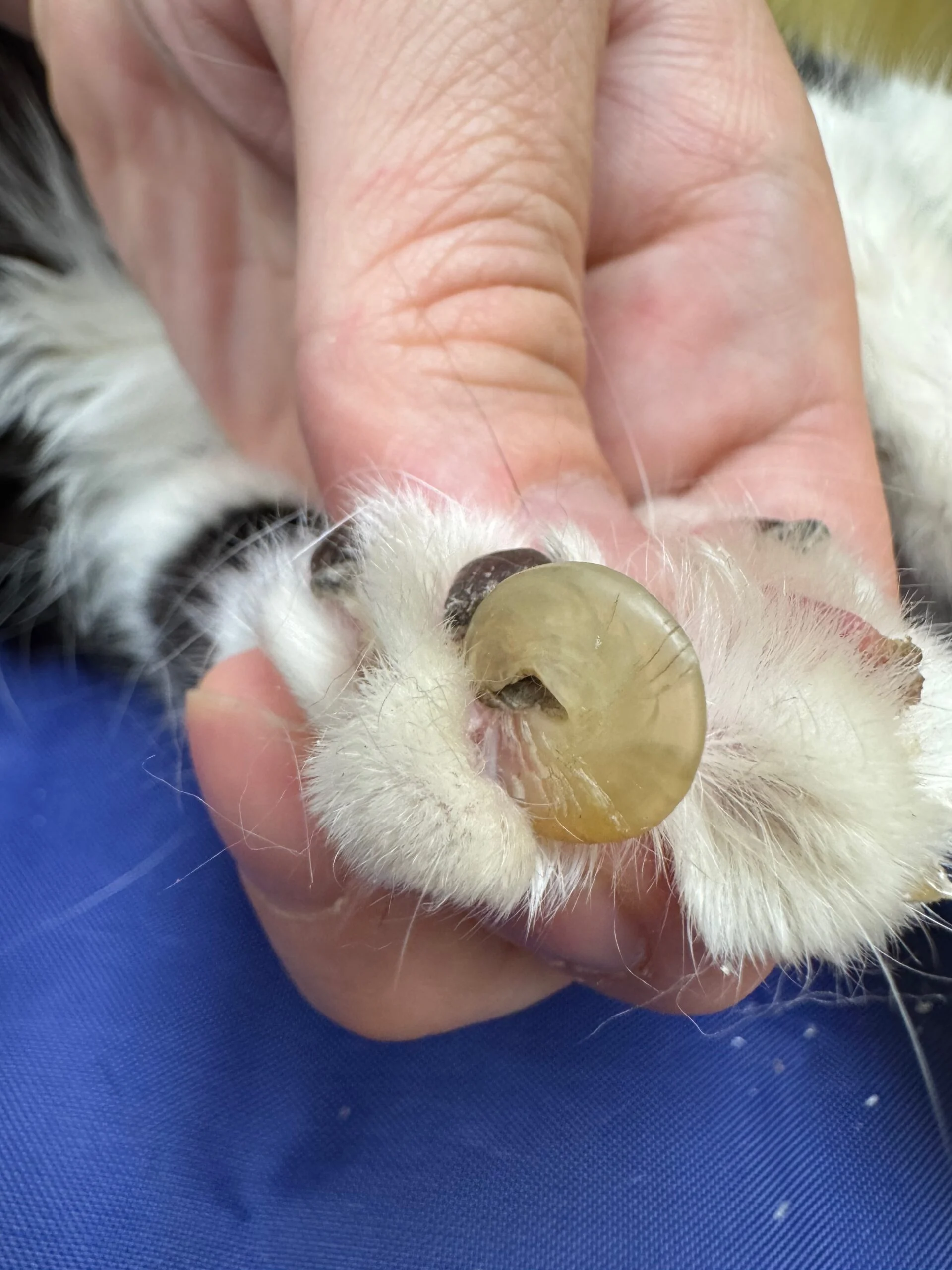
Overgrown cat claw requiring a care-setting decision
A Cats in the City service

Three reasons to change the setting

Routine mobile care has clear boundaries.

A request may be redirected because of the paw condition, the cat’s medical state, the handling threshold, or more than one of these at once.

01

Paw condition

There is injury, infection concern, or pad penetration

Embedded claws, open wounds, active bleeding, swelling, discharge, odor, broken nails, severe pain, or inability to bear weight require clinical or veterinary assessment.

Do not book as routine mobile maintenance.
02

Medical state

The cat is medically unstable or has new concerning signs

Breathing difficulty, collapse, profound weakness, uncontrolled pain, acute neurologic change, or other emergency signs require immediate veterinary care.

Mobile claw care is not an emergency service.
03

Handling threshold

Routine paws cannot be accessed safely in the home

A clinic setting, different staffing, or a veterinary medication plan may be needed when distress or risk remains too high despite preparation and behavior-responsive support.

The setting can change without blaming the cat.

Routing guide

Match the next action to the current finding.

This guide does not diagnose the paw. It helps prevent a scheduled mobile visit from delaying care that belongs somewhere else.

A

Long or sharp claws, clear of the pad, no injury

Submit a City Cat Claws request. Include age, medical history, handling needs, and the last trim.

Request routine mobile care
B

Advanced curvature or uncertainty, but no emergency signs

Use the Cats in the City claw-care pathway for clinic-based review and a more controlled assessment.

Open clinic-based claw care
C

Pad penetration, wound, bleeding, swelling, discharge, odor, limping, or marked pain

Contact a veterinarian promptly. Cats in the City may also help with routing, but the injury should not wait for routine service.

Review embedded-claw care
D

Emergency signs or uncontrolled distress

Seek immediate veterinary emergency care. Do not wait for an online response or a mobile route.

Handling can also change the setting

A routine claw can still require clinic-based support.

Home is not automatically the least stressful setting for every cat. When the room cannot be made secure, the cat cannot recover between attempts, or safe paw access is not possible, the team may recommend a clinic, a prescribed medication plan, or a different staffing configuration.

Read the reactive-cat pathway

Frequently asked questions

Questions that belong with this page.

The answers below are also used in the page’s structured data, so the visible content and machine-readable content stay aligned.

Open the complete FAQ

Embedded claws, open wounds, active bleeding, suspected infection, broken nails, marked swelling, severe pain, inability to bear weight, or a need for veterinary diagnosis are outside the routine mobile pathway.

Routine care, delivered where your cat lives

Make the next claw trim easier to reach.

Tell us about your cat, your address, and any handling considerations. The Cats in the City team will review the request and confirm the safest next step.